Report · Palestine
Are YouTube’s Policies Biased Towards Palestinians?
by 7amleh – The Arab Center for the Advancement of Social Media · 2020
About the report
Palestinians increasingly report that social media platforms suppress their freedom of expression; in 2019 alone, some organisations documented as many as 1,000 violations across platforms. This 7amleh study, by researcher Dr. Amal Nazzal, asks how YouTube’s policies are applied to Palestinian content.
Based on in-depth interviews with eleven journalists, activists, human rights defenders and others who use YouTube, the study finds a vague and problematic definition of “violent content” that threatens much Palestinian material, including documentation of human rights violations. It also documents discriminatory practices such as location-based discrimination, heavy surveillance, channel terminations and blocked monetisation, and the feelings of exclusion these cause.
The report ends with recommendations for YouTube to bring its policies and practices in line with human rights standards.
Read the report? Take the next step.
Join a Palestine solidarity group near you, travel with a delegation to Palestine, or become part of Solidarity Rising.
More reports on Palestine
Related resources
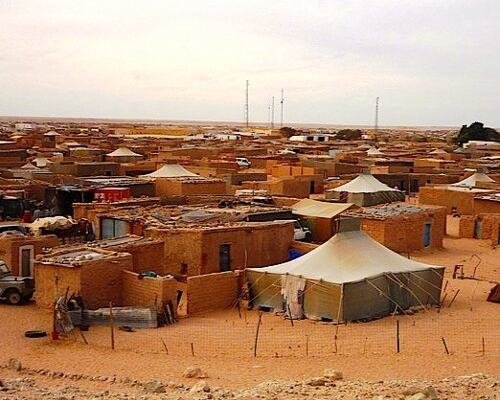
Western Sahara: Stalemate and Its Discontents, Alice Wilson
Anthropologist Alice Wilson, then at the University of Cambridge, speaks at the…
Western Sahara: Time to Be Free, Public Meeting in Dublin
Mohamed Belsat, the Polisario Front's representative to Europe, Sahrawi human…
The Ideal Refugees: Gender, Islam and the Sahrawi Politics of Survival, Elena Fiddian-Qasmiyeh
Elena Fiddian-Qasmiyeh of University College London presents her book The Ideal…