
Report · Tibet
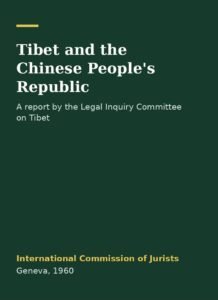
The Case Concerning Tibet
Tibet’s sovereignty and the Tibetan people’s right to self-determination
by Tibet Justice Center, Unrepresented Nations and Peoples Organization (UNPO) · 2013
About the report
This legal study by Tibet Justice Center and the Unrepresented Nations and Peoples Organization sets out the case that Tibet is rightfully an independent state and that the Tibetan people are entitled to self-determination. It was updated in 2013.
It argues that Tibet had all the attributes of statehood when the armies of the People’s Republic of China entered in 1950. Tibet had a distinct people and territory and a functioning government with its own civil service, courts, taxes, postal service and currency. It controlled its borders, issued passports and made treaties with Great Britain, Nepal, Mongolia and others. The study finds that the 1951 Seventeen Point Agreement is void because it was signed under military occupation and threat by representatives without authority.
The study reviews Tibet’s relations with the Mongol Yuan, Manchu Qing and Nationalist governments and concludes that Tibet never became part of China. It argues that China’s denial of genuine autonomy and human rights strengthens the Tibetan claim to external self-determination, including the choice of independence through a free referendum.
Read the report? Take the next step.
Join a Tibet solidarity group near you, travel with a delegation to Tibet, or become part of Solidarity Rising.
More reports on Tibet

Related resources
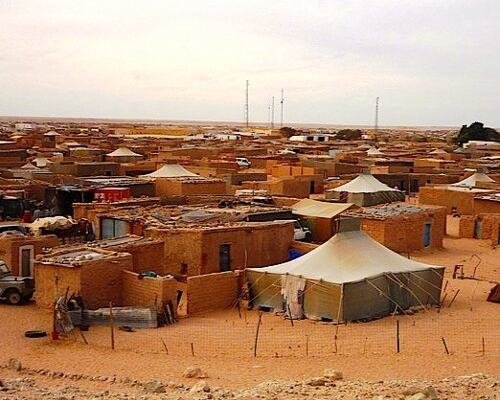
Western Sahara: Stalemate and Its Discontents, Alice Wilson
Anthropologist Alice Wilson, then at the University of Cambridge, speaks at the…
Western Sahara: Time to Be Free, Public Meeting in Dublin
Mohamed Belsat, the Polisario Front's representative to Europe, Sahrawi human…
The Ideal Refugees: Gender, Islam and the Sahrawi Politics of Survival, Elena Fiddian-Qasmiyeh
Elena Fiddian-Qasmiyeh of University College London presents her book The Ideal…