A broad coalition of Swedish civil society organizations urges Sweden to uphold international law in Western Sahara and defend the Sahrawi people’s right to self-determination.
Sweden Western Sahara Negotiation Concerns
The Swedish government has stated that Morocco’s autonomy plan should serve as the starting point for negotiations aimed at fulfilling the Sahrawi people’s right to self-determination. Establishing the occupying power’s proposal as the point of departure, however, narrows the scope of any future talks from the outset. Morocco’s plan presupposes Moroccan sovereignty over Western Sahara and excludes independence as an option. A process confined to such parameters cannot deliver a genuine act of self-determination, which under international law requires a free and unimpeded choice by the people concerned.
By aligning its position with language found in United Nations Security Council Resolution 2797—describing Morocco’s autonomy initiative as “credible” or “feasible”— Sweden risks adopting a framework that prejudges the outcome and weakens long-standing UN commitments to the Sahrawi people.
The Unfinished Decolonization of Western Sahara
Western Sahara remains recognized by the United Nations as a Non-Self-Governing Territory. When the Spanish colonizing power withdrew in 1975, Morocco invaded the territory and continued its colonization, despite an advisory opinion by the International Court of Justice affirming the Sahrawi people’s right to self-determination.
Following years of armed conflict, the UN brokered a ceasefire in 1991 based on a clear and internationally endorsed pathway: a UN-supervised referendum in which the people of Western Sahara would determine their political future. That referendum has yet to take place. It remains the only solution agreed upon by the parties and endorsed by the international community. Morocco however has never allowed such a referendum to take place.
Human Rights and Resource Exploitation
In the occupied territory, Sahrawi activists continue to face repression, restrictions on freedom of expression, and other serious human rights violations. At the same time, Western Sahara’s natural resources are exploited without the consent of its people, contrary to established principles of international law governing Non-Self-Governing Territories.
Tacitly endorsing Morocco’s autonomy proposal without addressing these realities risks legitimizing an ongoing occupation and further entrenching impunity.
Sweden’s Responsibility Toward Western Sahara
Sweden has historically been a principled voice for decolonization, multilateralism, and respect for international law. Prioritizing Morocco’s autonomy plan as the basis for negotiations risks undermining that legacy and weakening, rather than strengthening, the UN-led process.
Our Demands
We therefore call on the Swedish Government to:
- Reaffirm unequivocally the Sahrawi people’s right to self-determination.
- Withdraw its endorsement of Morocco’s autonomy proposal as the starting point for negotiations.
- Advocate for a genuine, UN-supervised referendum that includes independence as an option.
- Support independent human rights monitoring in Western Sahara.
- Ensure full respect for international law concerning the territory’s natural resources.
Related Posts

May 24, 2025
Ship to Gaza tour in Sweden
Solidarity Rising & Ship to Gaza are organizing a speaking tour in Sweden…
April 9, 2025
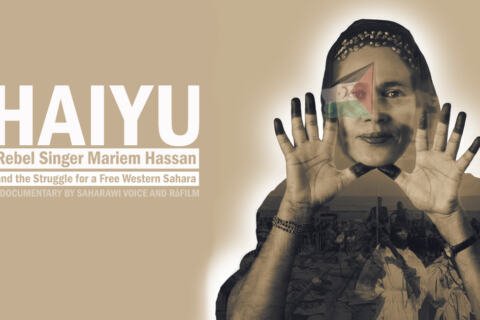
Western Sahara documentary Haiyu goes on tour in Sweden
Saharawi voice & Råfilms new documentary about the legendary Saharawi…
April 4, 2025
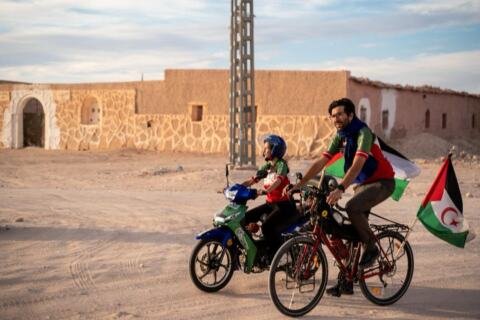
The Bike4Westernsahara campaign is finished
The Bike4WesternSahara Campaign Is Complete After more than 2.5 years of…