Solidarity Rising and the Sahrawi community have the pleasure of welcoming you to the 2nd edition of the Saharawi Solidarity Summit where activists, politicians, students and the global solidarity movement meets. Together we strengthen the movement for the liberation of Western Sahara
4-7th January 2027
000 days 00 hours 00 minutes 00 seconds
Summit Program
Learn about the struggle of the last colony in Africa. Meet activists, journalists, politicians, and researchers from every corner of the globe.
4th of January
Participants arrive in the camps and settle into their Sahrawi homestays.
5th of January
6-7th of January
Panel discussions, keynote presentations, workshops, and cultural activities.
The conference will be in English and there will be translations from Arabic and Spanish.
Recommended arrival
The refugee camps are located outside Tindouf, Algeria which has a domestic airport (routes).
We recommend to arrive in the evening of the 4th of January to have time to rest and acclimate before participating in the activities the next day.
Airport Pickup
You will be picked up at the Tindouf airport and taken to the Sahrawi refugee camps outside of Tindouf.
Settling in
You will be hosted by a local family who will provide you with food and accommodation through your stay.
It will give you the opportunity to learn about Sahrawi culture and community at close hand, experience their unique tea ceremony, the warmth of their hospitality and their stories.
5th of January
Program to be announced
6th of January
Program to be announced
7th of January
Program to be announced
Keynote Speakers
from the previous edition
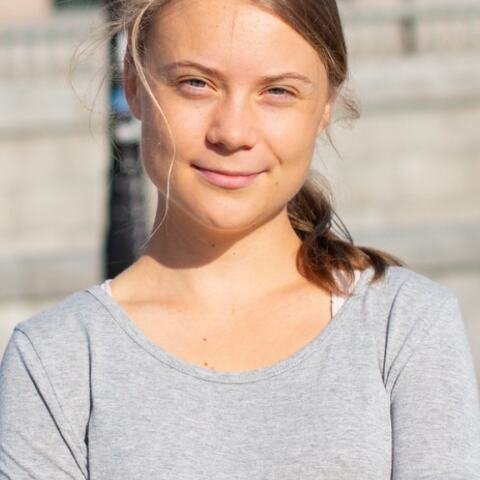
Greta Thunberg
Swedish climate activist known for initiating the global school strike for the climate by protesting outside of the Swedish parliament in 2018. After she addressed the 2018 UN Climate Change Conference weekly climate strike protests took place on Fridays around the world. In 2019, there were protests involving over a million students each. To avoid carbon-intensive flying, Greta sailed from England to New York where she addressed the 2019 UN Climate Action Summit. Since then, she has participated in many climate justice actions across the world and spoken out against the genocide in Gaza. She was named one of Time’s 100 most influential people.
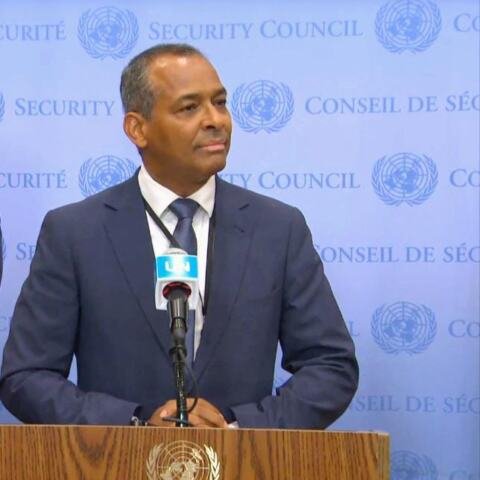
Sidi Omar
The Polisario representative at the United Nations (UN) in New York and the Coordinator with the United Nations Mission for the Referendum in Western Sahara (MINURSO). Since 2019, he has been a member of the National Secretariat, the highest decision-making body of the Polisario. He has had diplomatic posts and missions in Africa, Asia and Europe. He holds a Doctorate in Peace and Conflict Studies from Universitat Jaume I in Castellón, Spain. He has been a visiting professor at several universities in Africa, Asia, Europe and the Americas and has published two books and several articles in international journals in English and Spanish.
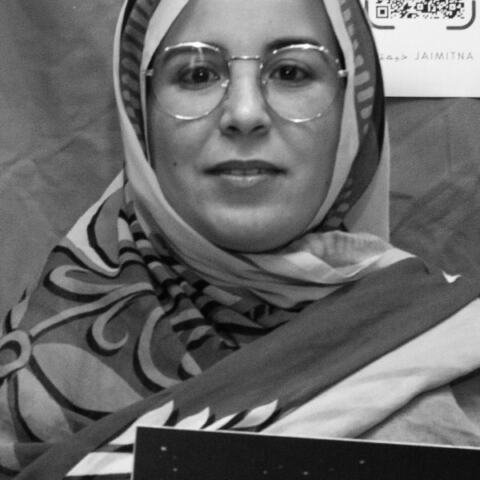
Yaguta El-Mokhtar Moulay
Sahrawi activist affiliated with UJSARIO (Union of the Youth of Saguia el-Hamra and Rio de Oro). She is also a climate activist advocating for the representation of the Sahrawi people in climate summits and working to raise awareness about the effects of the crisis on her people. Last December, she attempted to attend the Climate Summit in Dubai (COP28) but she was detained in Paris for several hours due to being Sahrawi and ultimately did not obtain authorization to travel.
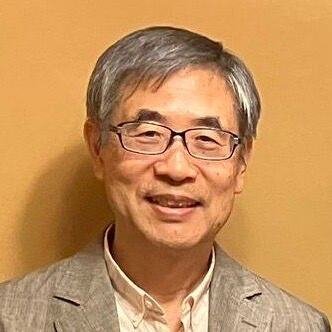
Akihisa Matsuno
He is the secretary general of the Friends of Western Sahara Japan. Through the 1980s and 1990s, he was a national coordinator of the Japanese solidarity movement with East Timor (Timor-Leste). As university professor (now retired), he taught international relations and conflict studies, and has written on political violence, self-determination, peacebuilding, and transitional justice with a focus on Indonesia, East Timor, West Papua, Palestine, and Western Sahara. He was also electoral staff for the referendum in East Timor in 1999 and was an international adviser to the East Timor’s post-conflict truth and reconciliation commission.
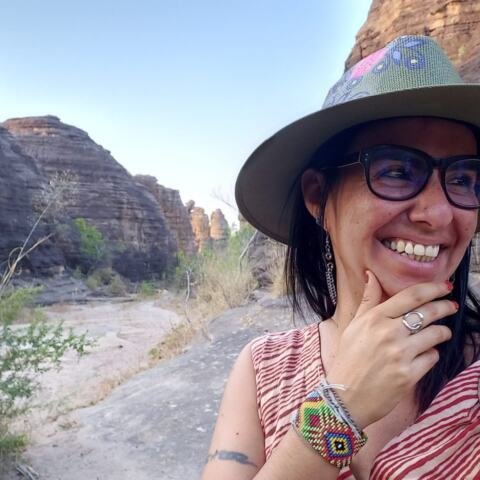
Diana Marcela Agudelo Ortiz
Psychologist and research professor at Universidad Externado de Colombia. Co-Secretary General of the Latin American Peace Research Council - CLAIP. Member of the Board of the International Peace Research Association - IPRA for Latin America. Her current work focuses on the relationship between subjectivity processes and peace building; intercultural health in Latin America, governance and autonomy of ethnic communities; mental health and political subjectivity. She has worked on the relationship between armed conflicts and mental health, anchored in cultural psychology and inspired by principles of epistemological pluralism and a co-liberation perspective.
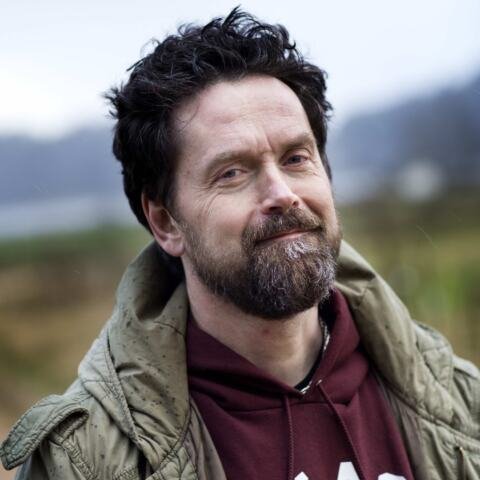
Stellan Vinthagen
Dr. Stellan Vinthagen is Professor of Sociology, and the Inaugural Endowed Chair in the Study of Nonviolent Direct Action and Civil Resistance at the University of Massachusetts, Amherst, where he directs the Resistance Studies Initiative. He is Editor of the Journal of Resistance Studies, and Co-Leader of the Resistance Studies Group at University of Gothenburg, Sweden. He has since 1980 been an educator, organizer and activist, participating in numerous nonviolent civil disobedience actions, for which he has served a total of more than one year in prison. One of his books is A Theory of Nonviolent Action - How Civil Resistance Works (2015).
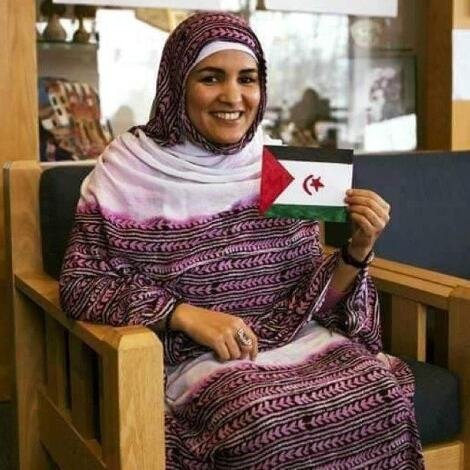
Najla Mohamed Lamin Salma
Sahrawi human rights and climate activist born and raised in the Sahrawi refugee camps and listed in BBC:s 100 most influential and inspirational women in the world in 2023. She is the founder and director of the Almasar Centre, which educates women and children living in the Sahrawi refugee camps about climate change.
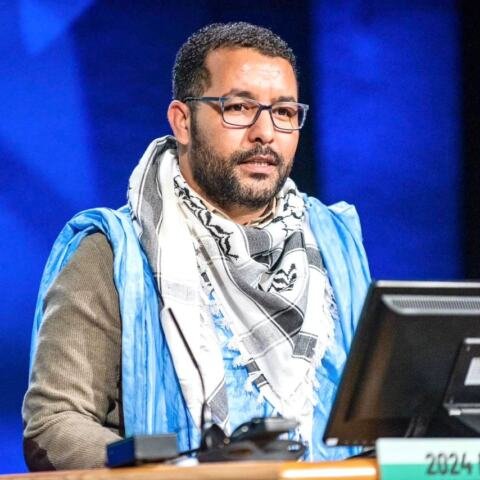
Mahfud Mohamed Lamin Bechri
Saharawi and human rights and climate activist from Sahrawi refugee camps. He is co-founder and member of the coordinating team of the "Western Sahara is not for sale" platform which was launched in 2021 by the Saharawi civil society to campaign against multinational companies involved in the plunder of Saharawi natural resources and for the respect of international law. Mahfud was part of the first Saharawi delegation who had access to the blue zone of the UN conference on climate change COP at its 27th edition in Sharm Sheick, Egypt in Egypt. Since then he has also been involved in raising awareness among Saharawis about the importance of engaging in climate justice spaces, and to fight against the exclusion of the international spaces of debate on climate change. Mahfud works as the Western Sahara country representative for the Spanish institute for nonviolent action NOVACT.
Background
Origins
Sanna and Benjamin started biking from their hometown Gothenburg, Sweden in May 2022 and after over two years they have biked over 20 000 km through 24 countries and territories where they have given hundreds of presentations at universities and public forums, spoken to journalists, parliamentarians and people on the streets to make sure that everyone knows about the occupation.
Stronger together
After riding through villages, cities, parliaments and media houses, we realized that there are not enough people organizing around the topic of Western Sahara, that those who do often don’t know about each other and aren’t always coordinating and those who want to join the movement don’t know where to start.
That is how the idea of the summit was born. As a meeting point for interested people around the world, wanting to learn about the Sahrawi people, to connect in solidarity to end colonization, and to meet and learn from others already doing so.
Western Sahara is the biggest remaining colony in the world on the UN:s lists over non-self governing territories. After almost one hundred years of Spanish colonization it was illegally invaded by Morocco and Mauritania in 1975. What followed was a war between the Polisario, the independence movement and UN recognized representation of the Sahrawi people, and the invaders.
World’s longest wall
After a few years Mauritania withdrew while Morocco gained financial and military support from the US, France, Israel and Saudi Arabia. With that help they built the world’s longest active military wall which today divides Western Sahara into two parts; the occupied territory which constitutes 80% of the country and the liberated territory which the Saharawi themselves govern.
Torture and imprisonment
In the occupied territories hundreds of thousands of Sahrawis face regular arrests, torture and imprisonment for protesting, carrying their flag, organising and practising their culture.
The referendum
The liberated territory constitutes 20% of the country and was freed during the war that ended in 1991 when Morocco promised to hold a referendum overseen by the UN to let the Sahrawis decide whether they wanted independence or autonomy under Moroccan sovereignty. That referendum has still not happened and in 2020 the war started again when Morocco breached the ceasefire agreement.
The occupation and human rights abuses continue and Western Sahara remains the biggest colony in the world today.
Forced displacement and life in exile
After the invasion of Western Sahara in 1975, large parts of the Sahrawi civilian population were forced to flee indiscriminate bombings and military violence. Tens of thousands escaped eastward and sought refuge in one of the most inhospitable areas of the Sahara Desert, in south-western Algeria. What was meant to be a temporary refuge became a protracted exile. There, the Sahrawis established five main refugee camps, named after cities in Western Sahara, which they have inhabited continuously for five decades. Today, these camps remain home to several generations who have never seen their homeland but continue to live with the expectation of return.
Sahrawi persistence, creativity, and everyday life
Building a functioning society in the middle of the desert required extraordinary resilience and collective effort. Over time, the camps have developed basic but vital infrastructure: roads connecting the camps, access to electricity, internet connectivity, systems for water distribution, and regular food deliveries coordinated with international humanitarian organizations. Education and healthcare are central priorities—each camp has schools, clinics, and hospitals, and many Sahrawis pursue higher education abroad before returning to serve their community.
Alongside these necessities, the camps are also spaces of creativity and cultural life. Through countless local initiatives, residents have transformed the desert environment in unexpected ways: small vegetable gardens cultivated in the sand, sports facilities including boxing gyms, cafés and even a pizzeria, art installations, cultural centers, and the internationally recognized Sahrawi Film School. These projects are not only about survival, but about dignity, self-expression, and maintaining a vibrant social and cultural life despite long-term displacement.
Self-governance and political organization
The Sahrawi refugee camps are administered by the Sahrawis themselves, with the land provided by Algeria for their use in exile. Democratic elections are held every four years to choose the president and government ministers of the Sahrawi Arab Democratic Republic (SADR). Each camp has its own elected municipal council (local administrative committee) responsible for day-to-day governance, while a governor appointed by the president oversees each camp and coordinates with the broader national government.
This system of self-governance shapes daily life in the camps and reflects a strong commitment to collective responsibility and political participation. For visitors, the camps offer a rare example of a long-term refugee community that is not only surviving, but actively governing itself, preserving its culture, and sustaining a shared political vision while waiting for a just resolution to their displacement.
Before you arrive
Familiarise yourself with the information about the conditions in the camps as well as travel arrangements.
Temperature
Although the camps are in the middle of the desert, January has a mild climate during the day ranging about 15-20 degrees during the day. During the nights the temperature is very cool and it can be quite cold inside the houses.
We therefore recommend that you bring light but covered clothes for daytime and some extra warm trousers and sweaters for night time.
Security
The camps are very safe and there have not been any security threats in the past decades. Many foreigners visit the camps throughout the year and there are even big events such as a marathon and film festival there.
During your visit you will have locals escorting you so you don’t get lost, since all the houses look confusingly similar, and to make you feel safe.
Language
The first language in the camps is Hassaniya, a dialect of Arabic, although many Sahrawis speak Spanish.
Translators and drivers will be provided for those of you wishing to make field visits. The cost will depend on the size of the group and length of stay. This can be coordinated with the local Polisario representative.
We will provide you with the contact to your nearest Polisario representative who will coordinate with the Algerian government to make sure that you get a Visa to the camps without any issue.
You will have to pay for your own travel costs from your country to the camps.
If you wish to travel in a group we can provide you with contacts to people traveling from the same country as you so that you can coordinate.
You will be met at the airport of Tindouf and transported to the camps and your accommodation.
You will need to bring cash to the camps since there are no ATMs. The currency should be in euros or dollars.
Do not try to exchange Algerian Dinars at the airport or any other Algerian city since the chance of getting an unfair exchange rate is high.
You will stay with a local Sahrawi family who will provide you with meals and a place to sleep.
The conditions of the houses are very simple but there is electricity, water and sometimes working wifi.
If you have dietary restrictions and you are for example vegetarian or vegan we recommend that you buy and cook your own food (we have done it ourselves). In that case there are food stores in the camps where you can find basic things such as pasta, rice, vegetables etc.
You will have to pay around 20 euros per day to the families for accommodation & food costs.