Western Sahara: The Refugee Nation
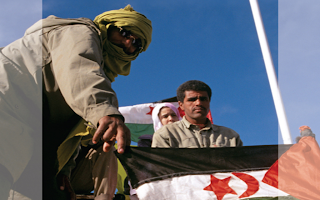
The narrator’s first impression of Western Sahara comes from early-1980s TV news watched as a child. A report on war in a former Spanish territory—starkly unlike the green, rain-soaked valleys of northern Iberia—left a strong visual mark: guerrilla fighters in yellowish turbans, raising Kalashnikovs and riding defiantly to the front in old open Land Rovers, some improvised into assault vehicles with machine guns mounted on top. In the narrator’s memory the scenes are pale and blurred, as if washed out by desert sirocco and the grain of a black-and-white television.
Western Sahara conflict: historical, regional and international dimensions
As the last African or Middle Eastern territory to be effectively colonised by a European power and one of the last to be freed from colonial yoke, the Western Sahara was considered in the 1950s and 60s primarily as an issue of decolonisation.
Western Sahara – The Refugee Nation
My first image of the Western Sahara dates back to the early 1980s, when I was only a child. I was watching TV, the news, and I remember the presenter saying something about a war in a former Spanish territory, which looked very different from the exuberantly green and perpetually wet northern Iberian valleys of my childhood.
Deterritorialized Youth
Sahrawi and Afghan refugee youth, unlike their Palestinian contemporaries, are encouraged to return both by international agencies and the powers occupying their traditional homelands.
The EU, Civil Society and Conflict Transformation in Western Sahara: The Failure of Disengagement
The protracted Western Sahara dispute, which has for over three decades pitted Morocco against the Sahrawi independentistas of the Polisario Front, epitomises the impotence of state-led conflict resolution efforts.