A gap in the wall: Collective report on violations of economic, social and cultural rights in Western Sahara under illegal occupation by Morocco
This report is the result of the work of a group of young people who, in Barria in 2013, set out to gain an in-depth understanding of the Western Sahara conflict. Their aim was to produce a report—at times even described as an investigation—and this document is the tangible outcome. Acknowledging their limitations as non-researchers, they seek to use data and witness testimonies to expose the realities of violations of economic, social, and cultural rights and to keep making those violations public. They argue that only by naming, visualizing, and giving a human face to these issues can solutions be found—solutions that, in some political circles, are repeatedly delayed despite their profound impact on the lives and futures of individuals, families, and an entire people.
A Battlefield Transformed: From Guerilla Resistance to Mass Nonviolent Struggle in the Western Sahara
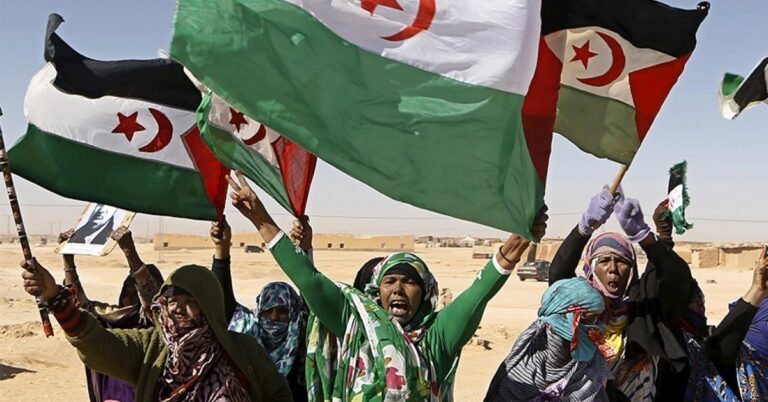
In late May 2005 erupted a mass uprising in the Maghreb against foreign domination. Thousands of ethnic Sahrawis in Western Sahara—a former Spanish colony under strict Moroccan military control since Morocco invaded and occupied the territory in 1975—took to the streets, echoing recent largely unarmed protest movements in Georgia, Ukraine, and Lebanon. Demonstrators demanded the withdrawal of Moroccan troops and independence for what they describe as Africa’s last remaining colony.
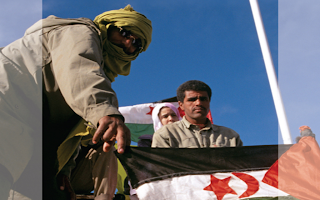
Western Sahara: The Refugee Nation
The narrator’s first impression of Western Sahara comes from early-1980s TV news watched as a child. A report on war in a former Spanish territory—starkly unlike the green, rain-soaked valleys of northern Iberia—left a strong visual mark: guerrilla fighters in yellowish turbans, raising Kalashnikovs and riding defiantly to the front in old open Land Rovers, some improvised into assault vehicles with machine guns mounted on top. In the narrator’s memory the scenes are pale and blurred, as if washed out by desert sirocco and the grain of a black-and-white television.
The Legal Issues Involved In The Western Sahara Dispute
Three years ago, the United Nations Committee of the Association of the Bar of the City of New York began examining the legal questions at the heart of the Western Sahara dispute, aiming to inform U.S. policy makers. In April 2011 it released a first report focused on whether Morocco may lawfully exploit natural resources in the part of Western Sahara it controls while sovereignty remains unresolved. The present report turns to the sovereignty question itself, assessing Western Sahara’s peoples’ right to self-determination and Morocco’s territorial claims under international law.
The Western Sahara Dispute: A Cautionary Tale for Peacebuilders
The UN and MINURSO have succeeded neither inconducting a referendum nor in fostering a negotiated solution to the problem. Indeed,the Secretariat and the Security Council missed two chances to suspend what has becomea self-perpetuating ‘peace process’; if they had taken advantage of these opportunitiesand suspended negotiations, the parties would have had to rethink their positions andperhaps entered into more serious negotiations aimed at reaching some sort of compromise.