
Lori A. Allen’s A History of False Hope is a study of how Palestinians repeatedly engaged with international investigative commissions and other liberal institutions, only to see their hopes for justice deferred or denied. The book follows this pattern across the 20th century, beginning with the King-Crane Commission after World War I and continuing through later UN investigations, to show how the language of rights, self-determination, and impartial inquiry became central to Palestinian political life even when the results were politically hollow.
Core argument
Allen’s main argument is that these commissions were not just neutral attempts to gather facts. They were part of a broader liberal international order that promised recognition and justice, but in practice often absorbed Palestinian testimony without acting on it in meaningful ways. The “false hope” in the title refers to the repeated expectation that if Palestinians proved their innocence, reasonableness, and democratic commitment, the world would respond fairly.
What the book emphasizes
The book shows that Palestinians were not passive subjects waiting to be judged. Allen highlights how they actively learned the language of international law and liberal politics, framed their claims in terms of rights and representation, and used commissions as an arena to assert their political existence. In that sense, the commissions mattered even when they failed, because they became a stage on which Palestinians argued for nationhood and self-determination.
Allen also argues that the process of investigation itself was political. Commissions could create the appearance of fairness, but they often worked within imperial and colonial structures that shaped what could be heard, what could be recorded, and what consequences would follow. The book pays close attention to the gap between testimony and power: Palestinians could speak, but their words were often not enough to change policy.
Bigger takeaway
A deeper point of the book is that Palestine’s history is tied to the history of international liberalism itself. Allen suggests that the modern language of human rights, objectivity, and impartial inquiry can become part of the machinery of disappointment when it is separated from actual political accountability. The book is therefore not only about Palestine; it is also a critique of the idea that investigation alone can produce justice.
Allen, Lori A. - A History of False Hope_ Investigative Commissions in Palestine - Stanford University Press (2020)Support our work
Support our work
Support our work with a one-off or monthly donation
Share via
Related resources
The Western Sahara Dispute: A Cautionary Tale for Peacebuilders
The UN and MINURSO have succeeded neither inconducting a referendum nor in…
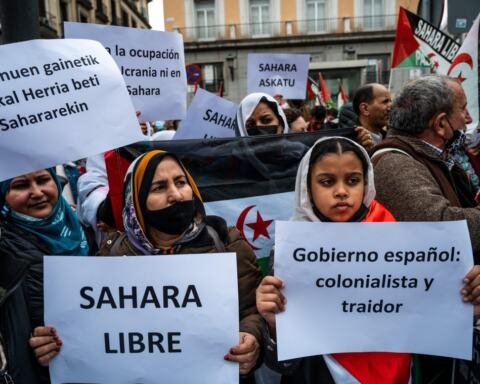
Western Sahara as a Hybrid of a Parastate and a State-in-Exile: (Extra)territoriality and the Small Print of Sovereignty in a Context of Frozen Conflict
Within the liminal universe of parastates, what makes Western Sahara/SADR…
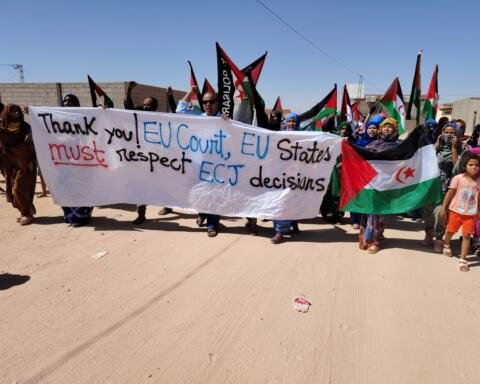
The Front Polisario Verdict and the Gap Between the EU’s Trade Treatment of Western Sahara and Its Treatment of the Occupied Palestinian Territories
Morocco’s control over Western Sahara and Israel’s control of the West Bank…


