Western Sahara, 1975–1991 Case Outcome: COIN Win (Mixed, Favoring COIN)
The conflict in Western Sahara began in 1975 after Spain withdrew as a colonial power, allowing Morocco to occupy the region (where it staked a historical claim). Morocco’s occupation was contested by the Popular Front for the Liberation of the Saguia el Hamra and Rio de Oro (Polisario) movement that had been formed to fight for independence from Spain.
Algerian‐Moroccan relations and their impact on Maghribi integration
Overall, Algerian-Moroccan relations have always been at odds, the existence since 1989 of the Arab Maghrib Union (UMA) notwithstanding. In fact, the UMA has not been operational due precisely to tension between the two countries. Strained relations derive from a historical and post-colonial evolution - dominated by power politics - of which Western Sahara is only one, albeit major, aspect.
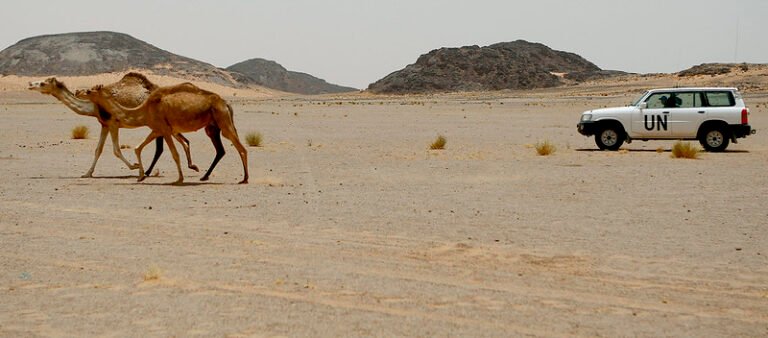
Building on Sand: UN Peacekeeping in the Western Sahara
More than a year after its deployment, and long after it was to have done its job and gone home, MINURSO was only ten percent deployed, awaiting orders to go ahead that seemed ever more remote with each passing month.
Quicksand in the Western Sahara? From Referendum Stalemate to Negotiated Solution
The enduring proxy conflict between Morocco and Algeria over Western Sahara's status, intertwined with indigenous independence aspirations, poses ongoing challenges to conventional conflict resolution approaches, highlighting the need for a deeper understanding of its geopolitical, economic, and identity dimensions to facilitate a lasting settlement.
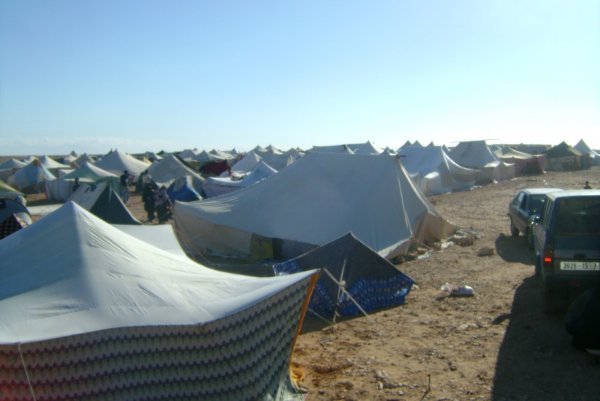
Aesthetics of Resistance in Western Sahara
By Jennifer M. Murphy & Sidi M. Omar (2013) This article explores the emergence of indignant movements globally in response to neoliberal globalization, focusing on the "Sahrawi Spring" in Moroccan-occupied Western Sahara as a case study. Drawing from Paulo Freire's