Related resources

The Exodus of Tibetan Children
Dholma and Sonam, sent secretly across the Himalayas so they can grow up as…
Dholma and Sonam, sent secretly across the Himalayas so they can grow up as…
Article · Journal article · Western Sahara
By William J. Durch · International Security (MIT Press) · Spring 1993 · 35 min read
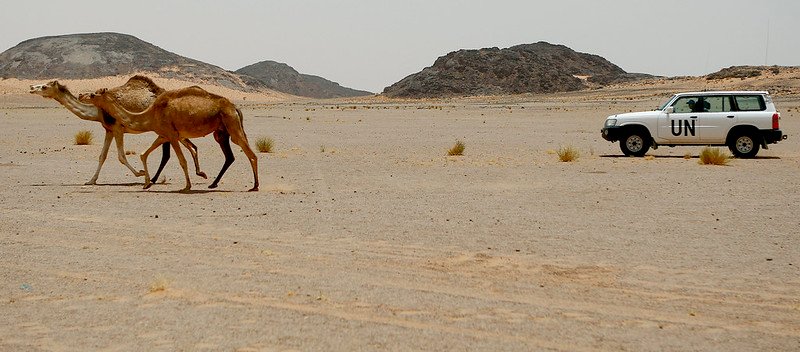
Published by International Security (MIT Press). Opens on jstor.org.
William J. Durch argues that the UN mission in Western Sahara, MINURSO, failed to hold its planned referendum because the conditions for successful peacekeeping were missing. He traces the conflict from Spain’s withdrawal and the Moroccan and Mauritanian takeover, and shows how the mission was planned in a fragmented way. Mediators and operational planners worked poorly together, the implementation plan took about three years to finish and the major powers never gave it sustained backing, with the United States and France tending to favour Morocco for strategic reasons.
Neither party would accept the prospect of losing the vote, but Durch shows that Morocco used its control of the territory to obstruct the mission, adding tens of thousands of disputed voters and restricting where UN staff could deploy. More than a year after it arrived, MINURSO was only about ten percent deployed. He argues that the comparison with Namibia was misleading, because South Africa had already decided to leave Namibia, while Morocco never made such a decision about Western Sahara.
Durch concludes that, with no realistic path to a fair result, ending the mission would be better than endorsing an outcome shaped by Morocco, because the UN’s credibility depends on being seen as impartial.
Join a Western Sahara solidarity group near you, travel with a delegation to Western Sahara, or become part of Solidarity Rising.